
Heart-Healthy Lifestyle Tips for Cholesterol Education Month

Cholesterol can feel invisible until a lab report puts numbers in front of you. There is no obvious warning light, no instant symptom, and no single meal that tells the whole story. Yet cholesterol levels can shape long-term heart health in a very real way.
The good news is that small daily choices matter. Food, movement, sleep, stress, smoking, alcohol, and routine checkups all influence heart health. Some people also need medication, and that is not a failure. It is one more tool.
This guide offers practical, realistic habits for Cholesterol Education Month and beyond. It is informational only and should not replace medical advice from a qualified healthcare professional.
Know what cholesterol numbers mean
Cholesterol is a waxy substance the body needs to build cells and make hormones. The liver makes cholesterol, and some foods add to the amount circulating in the blood.
Problems can develop when certain types of cholesterol rise too high, especially over time.
Most cholesterol panels include several measurements:
Measurement | What it generally means |
Total cholesterol | The overall amount of cholesterol in the blood |
LDL cholesterol | Often called “bad” cholesterol because higher levels can contribute to plaque buildup in arteries |
HDL cholesterol | Often called “good” cholesterol because it helps carry cholesterol away from the arteries |
Triglycerides | A type of fat in the blood that can rise with excess calories, alcohol, and some metabolic conditions |
LDL cholesterol often gets the most attention because it plays a major role in atherosclerosis, the gradual buildup of plaque inside blood vessels. Over time, plaque can narrow arteries and raise the risk of heart attack or stroke.
HDL cholesterol helps remove cholesterol from the bloodstream, but a high HDL number does not cancel out every other risk. Blood pressure, blood sugar, smoking, family history, age, kidney disease, and other factors matter too.
That is why the best next step is not guessing. It is getting tested, reviewing the results, and asking what the numbers mean in the context of overall risk.
Useful questions for a healthcare visit include:
What are my LDL, HDL, triglycerides, and total cholesterol?
What cholesterol goal makes sense for me?
Do my family history or other conditions change my risk?
How often should I repeat blood work?
Would lifestyle changes be enough, or should medication be part of the plan?
For many adults, cholesterol checks become part of routine preventive care. People with diabetes, high blood pressure, previous heart disease, or a strong family history may need closer monitoring.
Build meals around fiber, healthy fats, and simple swaps
Food choices influence cholesterol because they affect LDL levels, body weight, blood sugar, inflammation, and blood pressure. A heart-healthy pattern does not require a perfect diet. It works best when it is repeatable.
The strongest starting point is to eat more foods that are naturally high in fiber, especially soluble fiber. Soluble fiber binds with cholesterol in the digestive tract and helps move it out of the body.
Good sources include:
Oats and oat bran
Beans, lentils, peas, and chickpeas
Apples, pears, oranges, and berries
Barley
Ground flaxseed and chia seeds
Vegetables such as okra, eggplant, carrots, and Brussels sprouts
A simple breakfast can make this easier. Oatmeal with berries and walnuts gives fiber, unsaturated fat, and staying power. A lunch bowl with lentils, greens, brown rice, and olive oil dressing does the same.
Fat quality matters too. Saturated fat can raise LDL cholesterol in many people. Common sources include fatty cuts of meat, butter, full-fat dairy, coconut oil, palm oil, and many baked goods. Trans fats are especially harmful and are best avoided when possible.
Unsaturated fats are a better choice for everyday cooking and meals. These show up in olive oil, avocado, nuts, seeds, and fatty fish such as salmon, sardines, or trout.
Here are easy swaps that do not require starting from scratch:
Instead of | Try |
Butter on toast | Avocado, nut butter, or a light spread of olive oil |
Cream-based dressing | Olive oil and vinegar with herbs |
Processed meat sandwich | Turkey, tuna, hummus, or grilled vegetables |
White rice every night | Brown rice, barley, quinoa, or beans |
Chips as a snack | Nuts, fruit, air-popped popcorn, or vegetables with hummus |
Sugary breakfast cereal | Oats with fruit and cinnamon |
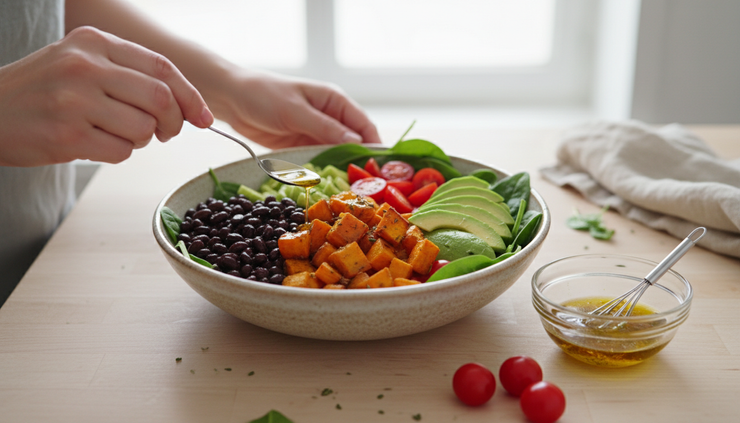
Highly processed foods can make cholesterol management harder because they often combine refined starch, added sugar, sodium, and less healthy fats. That does not mean every packaged food is off limits. Canned beans, frozen vegetables, plain yogurt, canned tuna, and whole-grain bread can all fit well.
The easier rule is to build most meals around whole or minimally processed foods:
Half the plate with vegetables or fruit
One quarter with lean protein or plant protein
One quarter with whole grains or starchy vegetables
A small amount of unsaturated fat for flavor and fullness
These Heart-Healthy Lifestyle Tips work best when they match real life. If dinner is usually takeout, choose grilled instead of fried, add vegetables, skip creamy sauces when possible, and save half for later if portions are large. If mornings are rushed, overnight oats or a smoothie with fruit, plain yogurt, and ground flaxseed can help.
Move in ways that fit the week
Exercise supports healthy cholesterol levels in several ways. It can help lower triglycerides, raise HDL cholesterol, support weight management, improve blood pressure, and improve how the body uses insulin.
The goal is not to turn every workout into a major event. Consistency matters more than intensity at the start.
For many adults, public health guidance recommends aiming for regular moderate aerobic activity each week, along with muscle-strengthening activities. A brisk walk counts. So does cycling, swimming, dancing, hiking, active yardwork, or using a treadmill while watching a show.
If exercise has been limited, start smaller:
Walk for 10 minutes after lunch or dinner
Take the stairs for one or two floors
Park farther away from the store entrance
Do a short bodyweight circuit at home
Stretch while coffee brews
Use a resistance band during TV time
Small sessions can add up. A 10-minute walk after meals may feel less intimidating than one long workout. It can also help with blood sugar control, which matters for heart health.
Strength training deserves attention too. Muscle helps the body use energy more efficiently. It also supports balance, mobility, and independence with age.
Simple strength moves include:
Chair squats
Wall pushups
Step-ups
Resistance band rows
Glute bridges
Light dumbbell presses
Farmer carries with grocery bags
People who have chest pain, severe shortness of breath, dizziness, known heart disease, or a long break from exercise should ask a healthcare professional what level of activity is safe.
The best movement plan is one that can survive busy weeks. If gym time is rare, walking after dinner may be the anchor. If joints hurt, water exercise or cycling may feel better. If motivation fades alone, a walking partner can help.

Support cholesterol with sleep, stress care, and smoke-free habits
Cholesterol is not only about food and exercise. Daily recovery habits affect the heart too.
Poor sleep can make it harder to manage appetite, blood pressure, blood sugar, and weight. Many adults do better with a steady sleep schedule, a dark room, limited late caffeine, and a wind-down routine that does not involve bright screens right before bed.
A realistic sleep reset might include:
Set a consistent wake time
Keep caffeine earlier in the day
Dim lights in the evening
Keep the bedroom cool and quiet
Avoid large, heavy meals close to bedtime
Talk with a clinician about loud snoring, gasping, or ongoing daytime sleepiness
Stress can also influence heart health. Stress may not directly explain every cholesterol change, but it can shape the behaviors that drive risk. Many people eat differently, sleep less, drink more alcohol, or skip exercise during stressful periods.
Stress care does not need to be elaborate. Try a short daily practice that lowers the body’s stress response:
Slow breathing for three to five minutes
A walk outside without headphones
Gentle stretching
Prayer, meditation, or quiet reflection
Journaling before bed
Calling a supportive friend
Taking breaks from constant news or alerts
Smoking is one of the highest-impact heart health risks. It damages blood vessels, lowers HDL cholesterol, and raises the risk of heart attack and stroke. Quitting can improve health quickly, even for people who have smoked for years.
Nicotine replacement, prescription medications, counseling, quitlines, and support groups can all help. Many people need more than one attempt. That does not mean quitting is impossible. It means the plan may need more support.
Alcohol also deserves attention. Drinking can raise triglycerides in some people and may add extra calories. People who do not drink should not start for heart health. Those who drink can ask a healthcare professional what amount, if any, is appropriate based on medications, liver health, triglycerides, sleep, and personal history.
Make prevention easier with routines and follow-up
The biggest cholesterol improvements often come from repeatable routines, not dramatic short-term efforts. A routine removes some of the daily decision-making.
Start with one or two habits that feel manageable. Once they become normal, add another.
A simple four-week reset could look like this:
Week | Focus | Example goal |
Week 1 | Breakfast | Eat oats, fruit, or another high-fiber breakfast most days |
Week 2 | Movement | Walk for 10 to 20 minutes at least five days |
Week 3 | Dinner | Add beans, vegetables, or whole grains to evening meals |
Week 4 | Recovery | Set a steady bedtime and reduce late-night snacking |
Tracking can help, but it should not become a burden. A note in a phone, a calendar checkmark, or a weekly meal plan may be enough.
Here are a few practical ways to make heart-healthy habits easier:
Keep washed fruit visible
Put nuts or whole-grain crackers in single-serving containers
Stock canned beans and frozen vegetables
Cook extra grains for the next day
Keep walking shoes by the door
Schedule lab work before the year gets busy
Set medication reminders if prescriptions are part of the plan
Medication can be life-saving for people at higher risk. Statins and other cholesterol-lowering medicines help many people reduce LDL cholesterol and lower cardiovascular risk. Lifestyle still matters when medication is used, but food and exercise do not replace prescribed treatment unless a clinician says so.
Family history also matters. Some people inherit conditions that cause very high cholesterol, even with healthy habits. If close relatives had early heart disease or very high LDL cholesterol, bring that up during medical visits.

The most useful plan is personal. Someone with high triglycerides may need to focus on added sugar, alcohol, and weight management. Someone with high LDL may need to reduce saturated fat and increase soluble fiber. Someone with high blood pressure may need more attention to sodium, potassium-rich foods, and regular activity.
The common thread is steady care. Know the numbers. Ask clear questions. Choose habits that can repeat on ordinary days.
Heart health is built in grocery aisles, kitchens, sidewalks, bedrooms, and exam rooms. One healthy meal will not change everything, and one imperfect day will not ruin progress. The next choice still counts.


Comments