
Celebrate Fruits and Veggies Month with Colorful Healthy Eating Ideas
A plate with only one color can feel a little flat. Add red strawberries, orange carrots, yellow peppers, leafy greens, blueberries, and purple cabbage, and suddenly the meal looks better before the first bite.
That is the simple joy of Fruits & Veggies Month. It is a built-in reminder to bring more produce into everyday meals without turning food into a project. Colorful eating does not need a strict meal plan, hard-to-find ingredients, or a perfect farmers market haul. It can start with a handful of spinach in eggs, frozen berries in oatmeal, or sliced cucumbers next to a sandwich.
Fruits and vegetables bring fiber, water, vitamins, minerals, and plant compounds to meals. Eating a wide range of them is a practical way to support overall wellness. This article is for general wellness information and does not replace medical advice.

Start with color instead of rules
Counting every serving can work for some people, but many find it easier to think in color. A meal with two or three colors from plants often has more texture, flavor, and variety than a meal built from beige foods alone.
A simple color check can happen before any meal:
Is there something green on the plate?
Could a fruit add sweetness or freshness?
Would a crunchy vegetable make the meal more satisfying?
Can a frozen, canned, or pre-cut option make this easier?
Color is also a helpful way to avoid getting stuck in a produce rut. If the same banana, apple, and romaine lettuce show up every week, try adding one new shade at a time.
Color | Easy options | Simple way to use them |
Red | Tomatoes, strawberries, red peppers, apples | Add to salads, wraps, toast, or yogurt |
Orange | Carrots, sweet potatoes, oranges, cantaloupe | Roast, blend, snack, or serve as a side |
Yellow | Corn, pineapple, yellow squash, lemons | Add brightness to bowls, salsa, or grain dishes |
Green | Spinach, broccoli, peas, kiwi, zucchini | Stir into eggs, pasta, soups, or smoothies |
Blue and purple | Blueberries, plums, eggplant, purple cabbage | Use in oatmeal, slaws, sheet-pan meals, or snacks |
White and tan | Cauliflower, mushrooms, onions, pears | Roast, sauté, blend into soups, or slice fresh |
The goal is not to eat every color every day. Think of it as a weekly pattern. A few reds at breakfast, greens at lunch, orange at dinner, and purple in a snack already add up.
Make breakfast brighter
Breakfast is one of the easiest places to add fruit, and it often takes less than a minute. Fresh fruit is great, but frozen fruit can be just as useful, especially when berries or peaches are out of season.
Try these easy breakfast ideas:
Berry oatmeal
Stir frozen berries into oats while they cook. The fruit softens and adds natural sweetness.
Veggie eggs
Add spinach, mushrooms, peppers, or tomatoes to scrambled eggs or an omelet.
Yogurt bowl
Top plain yogurt with sliced banana, berries, chopped apple, or thawed mango.
Toast with produce
Try avocado with tomato, peanut butter with banana, or ricotta with strawberries.
Smoothie with balance
Blend fruit with spinach, milk or yogurt, and a spoonful of nut butter or seeds.
A good breakfast does not need five types of produce. Even one fruit or vegetable can shift the meal in a better direction. If mornings are rushed, wash grapes, slice melon, or portion frozen fruit the night before.

Build lunches that stay interesting
Lunch is where produce often gets skipped, especially when leftovers or sandwiches are the default. The trick is to add fruits and vegetables in ways that improve the meal, not just sit beside it like an afterthought.
A better lunch formula looks like this:
Base plus protein plus produce plus flavor.
The base might be bread, rice, quinoa, pasta, greens, tortillas, or potatoes. The protein could be beans, lentils, eggs, chicken, tuna, tofu, cheese, or yogurt. The produce brings crunch, moisture, sweetness, or freshness. Flavor ties it together with dressing, salsa, herbs, hummus, mustard, citrus, or spices.
Here are a few combinations that work well:
Add crunch to sandwiches and wraps
A sandwich tastes better with texture. Add thin cucumber slices, shredded carrots, spinach, roasted peppers, tomato, sprouts, or slaw. For a sweet contrast, serve grapes, berries, apple slices, or orange wedges on the side.
Turn leftovers into bowls
Leftover rice, pasta, or roasted potatoes can become lunch with the right produce. Add cooked broccoli, corn, tomatoes, shredded cabbage, avocado, or roasted squash. Finish with salsa, pesto, yogurt sauce, or a squeeze of lemon.
Make salads more filling
A salad should not leave anyone hungry an hour later. Add beans, hard-boiled eggs, chicken, tofu, tuna, nuts, seeds, cheese, or whole grains. Then bring in several produce textures, such as leafy greens, crisp peppers, juicy tomatoes, and creamy avocado.
Pack a snack-style lunch
Some days, a snack plate is easier than a composed meal. Use cut vegetables, fruit, whole-grain crackers, hummus, cheese, nuts, boiled eggs, or yogurt. This works especially well when appetite, time, or heat makes a heavy lunch less appealing.
Use dinner as the main produce moment
Dinner often has more room for vegetables because cooking is already happening. The easiest win is to make vegetables part of the main dish instead of always treating them as a side.
A few flexible dinner ideas can carry the whole month.
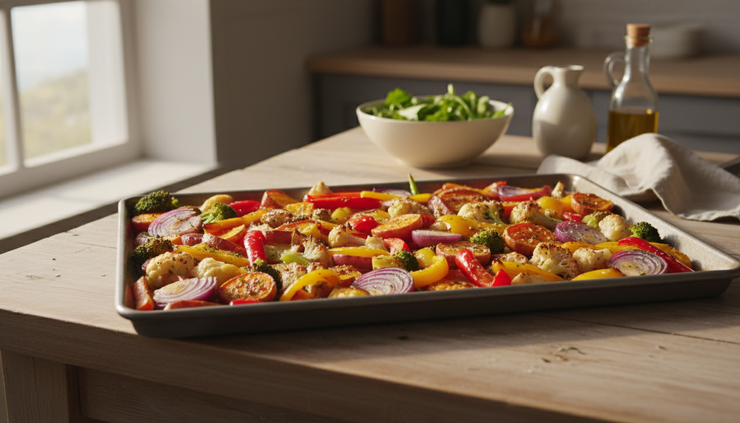
Roast a sheet pan of vegetables
Roasting brings out sweetness and makes many vegetables easier to enjoy. Try broccoli, carrots, cauliflower, onions, peppers, zucchini, Brussels sprouts, mushrooms, or sweet potatoes.
Toss with oil, salt, pepper, and seasoning. Roast until the edges brown. Serve with chicken, fish, beans, tofu, pasta, rice, or eggs.
Good seasoning pairs include:
Garlic, lemon, and parsley
Chili powder, cumin, and lime
Italian herbs and black pepper
Curry powder and yogurt sauce
Smoked paprika and a little vinegar
Add vegetables to sauces and soups
Soups, stews, chili, and pasta sauces are perfect for extra produce. Add diced carrots, onions, celery, zucchini, mushrooms, spinach, tomatoes, pumpkin, or bell peppers. Blended soups can also help use vegetables that are starting to soften.
For pasta night, mix vegetables into the sauce, then add more on top. A bowl of pasta with tomato sauce, spinach, mushrooms, and roasted zucchini feels full and colorful without losing comfort.
Make taco night more colorful
Tacos, burritos, and bowls welcome produce well. Use lettuce, cabbage, tomatoes, corn, avocado, peppers, onions, radishes, mango, pineapple, or cilantro. A quick fruit salsa can make a simple dinner feel special.
Try chopped mango or pineapple with red onion, lime juice, cilantro, and jalapeño. Spoon it over fish, beans, chicken, or roasted sweet potatoes.
Make snacks more colorful and less complicated
Snacks can be a low-pressure way to celebrate Fruits and Veggies Month with Colorful Healthy Eating Ideas. The key is to pair produce with something that helps it feel satisfying.
Fruit or vegetables alone may work for a light snack. For a more filling option, pair them with protein, fat, or whole grains.
Try these pairings:
Apple slices with peanut butter
Carrots and cucumbers with hummus
Grapes with cheese
Banana with yogurt
Celery with cream cheese or nut butter
Berries with cottage cheese
Snap peas with ranch or tzatziki
Pear slices with walnuts
Bell pepper strips with guacamole
Cherry tomatoes with mozzarella
Prep matters. A whole watermelon in the fridge can feel like a chore. A container of sliced watermelon feels like an invitation. Washed grapes, cut carrots, peeled oranges, and ready-to-eat berries often disappear faster than produce that still needs work.
For households with different tastes, try a small “snack bin” in the fridge. Fill it with easy options like cut fruit, mini cucumbers, sugar snap peas, applesauce cups with no added sugar, or single-serve hummus. Keep it visible. People are more likely to eat what they can see.
Shop smarter so produce does not go to waste
Buying more fruits and vegetables is easy. Using them before they spoil takes a little planning. A good shopping rhythm helps keep produce fresh and meals flexible.
Start with two questions:
What produce will be eaten raw this week?
What produce will be cooked this week?
Raw options should be easy to grab, like fruit, salad greens, cucumbers, carrots, grape tomatoes, or peppers. Cooking options can be sturdier, like broccoli, cabbage, potatoes, squash, mushrooms, onions, or frozen vegetables.
Frozen and canned produce deserve a place in the kitchen, too. Frozen berries, peas, spinach, corn, mango, and broccoli can save busy meals. Canned tomatoes, pumpkin, beans, corn, and fruit packed in juice are useful pantry staples.
A simple weekly produce plan might include:
Two fruits for breakfast and snacks
Two vegetables for raw lunches or sides
Two vegetables for cooking
One frozen option for backup
One “fun” pick for variety
The fun pick keeps things interesting. It could be a new apple variety, purple carrots, fresh herbs, kiwi, pomegranate seeds, baby bok choy, or a vegetable from a local farm stand.
Try a simple month-long color challenge
A month-long challenge should feel playful, not strict. The best version is easy enough to continue after the month ends.
Here is a simple plan:
Week one focuses on adding one color a day
Pick one fruit or vegetable color each day and add it to any meal. Red tomatoes at lunch, green spinach at breakfast, orange carrots with dinner, or blueberries as a snack all count.
Week two focuses on breakfast
Add fruit or vegetables to breakfast at least four times. Keep it simple with berries, bananas, spinach, mushrooms, avocado, or tomatoes.
Week three focuses on dinner
Make vegetables part of the main dish three or four times. Try a sheet-pan dinner, vegetable soup, stir-fry, tacos with slaw, or pasta with extra vegetables.
Week four focuses on trying something new
Choose one fruit or vegetable that is less familiar. Look up one simple preparation, then try it without pressure. If it is not a favorite, that is still useful information.
For families, roommates, or shared meals, make the challenge visual. Put a paper color tracker on the fridge and mark each color as it appears. Keep the focus on discovery, not perfection.

Keep it affordable and realistic
Colorful eating can fit many budgets. The most expensive produce is often the produce that spoils before it gets eaten, so the best choices are the ones that match real routines.
Use these habits to save money and reduce waste:
Buy some fresh and some frozen
Fresh produce works well for immediate meals. Frozen produce buys time.
Choose sturdy vegetables
Cabbage, carrots, potatoes, onions, sweet potatoes, and winter squash often last longer than delicate greens.
Prep only what helps
Wash berries when ready to eat, but chop carrots or peppers ahead if that makes snacks easier.
Use the whole ingredient
Broccoli stems can be sliced and roasted. Herb stems can flavor soups. Soft fruit can go into smoothies or oatmeal.
Repeat ingredients in different ways
Use spinach in eggs, wraps, pasta, and smoothies. Use cabbage in slaw, tacos, stir-fry, and soup.
A realistic plan beats an ambitious one. If three kinds of produce a day is new, start with one. If fresh vegetables often go bad, lean on frozen. If cooking feels hard during the week, prep one tray of roasted vegetables on the weekend and use it in several meals.
Let color lead the way
Fruits & Veggies Month is a chance to make healthy eating feel more appealing, practical, and creative. Start with color, then build from there. Add berries to breakfast. Put crunch in lunch. Roast vegetables for dinner. Keep fruit visible. Use frozen produce when life gets busy.
The best habit is the one that fits normal days. Choose one colorful idea this week, repeat it until it feels easy, then add another. A brighter plate can begin with something as small as a handful of spinach, a sliced apple, or a bowl of carrots on the table.


Comments